Shaping Europe’s digital sovereignty
DIGITALEUROPE’s Summer Summit returns on 1 July at crunch time for Europe’s digital future. As geopolitical tensions rise and technological competition accelerates, digital sovereignty is no longer abstract policy language, it’s a strategic imperative.
The Summit will convene senior EU policymakers, industry leaders and international partners to discuss how Europe can convert ambition into leadership. Discussions will cut straight to the core: how to design rules on AI, data and critical technologies that enable innovation while strengthening resilience and competitiveness.
With key regulatory debates reaching a tipping point, the focus will be on execution: building trusted infrastructure, securing investment and aligning sustainability with technological growth.
The event agenda and further speakers will be announced shortly!
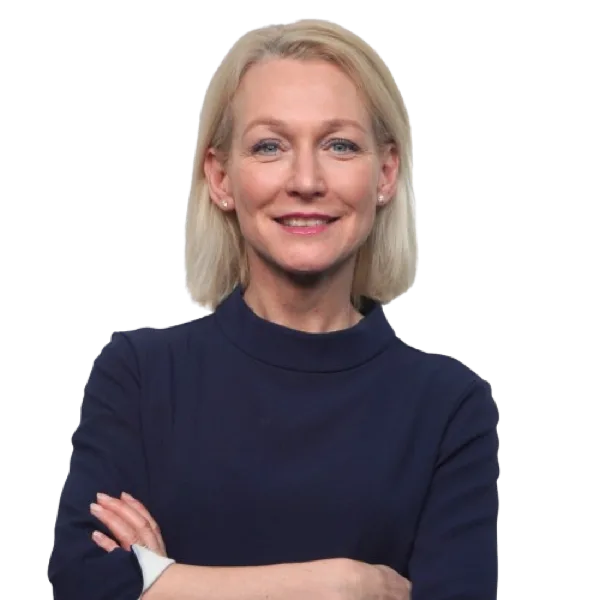
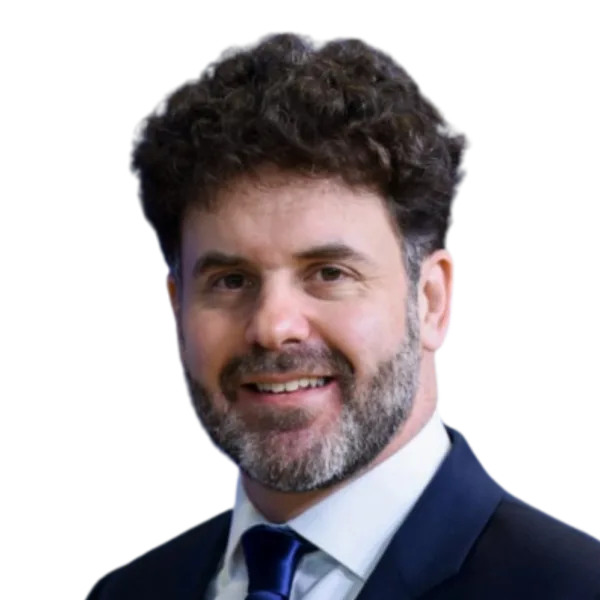
Cecilia Bonefeld-Dahl, Director General, DIGITALEUROPE Cecilia Bonefeld-Dahl is Director-General of DIGITALEUROPE, the leading digital technology industry association representing over 35,000 digital companies in Europe.
She is a member of the Board of Directors of Gaia-X, of the European Commission’s Industrial Forum, and of the B20 Digital Transformation Taskforce. She is also a member of the Stakeholder Cybersecurity Certification Group of ENISA (the European Union Agency for Cybersecurity) and of NATO’s high-level Advisory Group for Emerging and Disruptive Technologies, as well as a board member of the European Commission’s Digital Skills and Jobs Coalition and the European Parliament-led European Internet Forum, and a member of the supervisory board of EIT Digital.
Formerly, Cecilia Bonefeld-Dahl was a member of the European Commission’s High Level Expert Group on Artificial Intelligence, and of the High-level Strategy Group on Industrial Technologies in charge of identifying Key Enabling Technologies.
She was an Executive Board Member of the Royal Danish Export Council and Chair of the Export Grant Committee under the Danish Foreign Ministry. She also served as Executive Board member in DIGITALEUROPE, and as a member of the association’s high level Digital Advisory Council.
Cecilia Bonefeld-Dahl has served as Board Member of the Danish Chamber of Commerce and was President of the Board of the Danish ICT association (ITB), where she led the development of policy positions on issues such as business digitalisation, ICT security, disruptive business models, telecoms and education.
Cecilia Bonefeld-Dahl has more than 25 years of experience in the ICT industry. She previously held international positions at IBM and Oracle as well as with SMEs, building businesses across Europe and China and founding the cloud provider GlobeIT. She has deep insights into the digitalisation of business and society and the data-driven economy, and is regularly invited to deliver keynote speeches on these issues at high-level events across the world.
Cecilia Bonefeld-Dahl
Director General,
DIGITALEUROPE
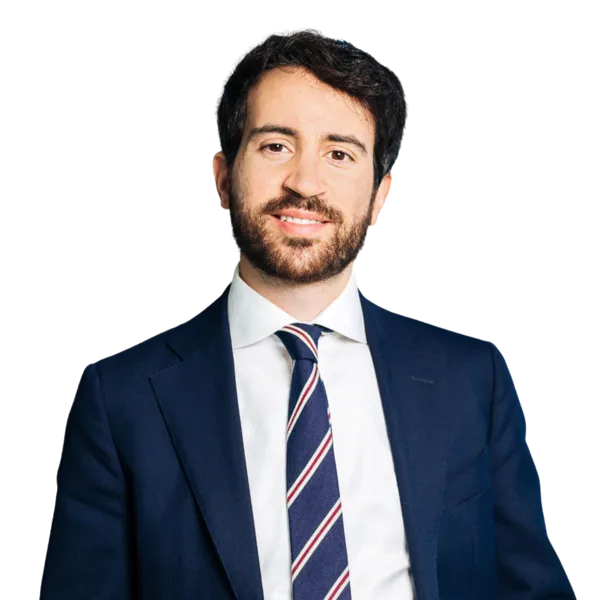
Britta Behrendt, Director General for Digital Transformation and Government Modernisation, Germany Britta Behrendt has been a German senior civil servant with over two decades of experience in federal administration and law making. After completing her legal training, which included an LLM at the University of Cape Town, she joined the Bundestag as a parliamentary research and lawmaking assistant (2004–2008) before moving into senior roles at the Federal Ministries of the Interior and Defence (2008–2023). These included Liaison Officer to the Italian Ministry of the Interior in Rome, personal adviser to Minister of Defence Ursula von der Leyen and Head of Cabinet to Minister of the Interior Thomas de Maizière. In April 2023, she was appointed State Secretary for Climate Protection and Environment in the Berlin state government. Starting in September 2025, Behrendt took over as Director General (Digitalisation and State Modernisation, Home Affairs and Legal Policy) at the Federal Chancellery.
Britta Behrendt
Director General for Digital Transformation and Government Modernisation, Germany
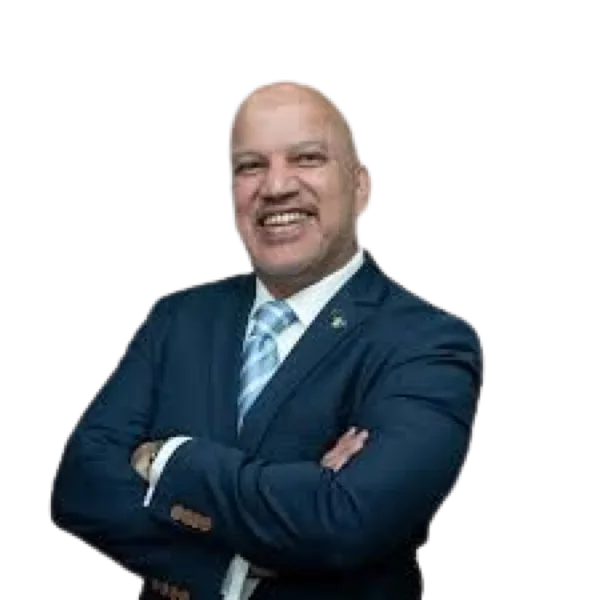
Marina Kaljurand, Member, European Parliament Kaljurand serves as the 1st Vice-Chair of the LIBE (Civil Liberties, Justice and Home Affairs) committee in the European Parliament. In LIBE committee she has focused on digital policy, and there she has been appointed Rapporteur of the Digital Omnibus Regulation. This is Kaljurand’s second mandate in the Parliament. She is the Chair of the Steering Committee of the European Internet Forum (EIF), from October 2024.
Kaljurand was a member of the UN Advisory Board on Disarmament Matters (2020 – 2023).
Kaljurand was a member of the UN Secretary General’s High Level Panel on Digital Cooperation (2018-2019). She chaired the Global Commission of the Stability of Cyberspace (2017-2019).
Kaljurand started in the Estonian Foreign Service in 1991 and held several prominent positions, including Estonian Ambassador to the State of Israel, the Russian Federation, United States of America, Canada, Mexico and Kazakhstan.
Kaljurand has served twice as the Estonian National Expert at the United Nations Group of Governmental Experts on Developments in the Field of Information and Telecommunications in the Context of International Security (GGE), in 2014-2015 and in 2016-2017.
Marina Kaljurand graduated cum laude from the Tartu University (1986, LLM). She has a professional diploma from the Estonian School of Diplomacy (1992) and MA from the Fletcher School of Law and Diplomacy, Tufts University (F95).
Marina Kaljurand
Member,
European Parliament
Thibaut Kleiner, Director, Future Networks, DG CNECT, European Commission The first ten years of his career in the Commission were spent in the area of competition policy (merger, antitrust and State aid). He was notably member of the cabinet of Neelie Kroes, Commissioner for Competition, in 2007-2010 and head of unit for State aid coordination in DG Competition. In September 2011, he moved to the digital policy area, as advisor of Vice-President Neelie Kroes, in charge of the Digital Agenda, and supervised Internet policies at large (Internet Governance, cybersecurity, cloud, data). From January 2014 to June 2016, he was head of unit in charge of network technologies (5G and Internet of Things) in DG Connect. From June 2016 to December 2019 he was the deputy head of cabinet of Commissioner Oettinger, in charge of Budget and Human Resources and he then came back to DG Connect to head the unit in charge of Research Strategy and Coordination. An economist by training, Thibaut holds a Master from HEC Paris and a PhD from the London School of Economics.
Thibaut Kleiner
Director, Future Networks, DG CNECT, European Commission
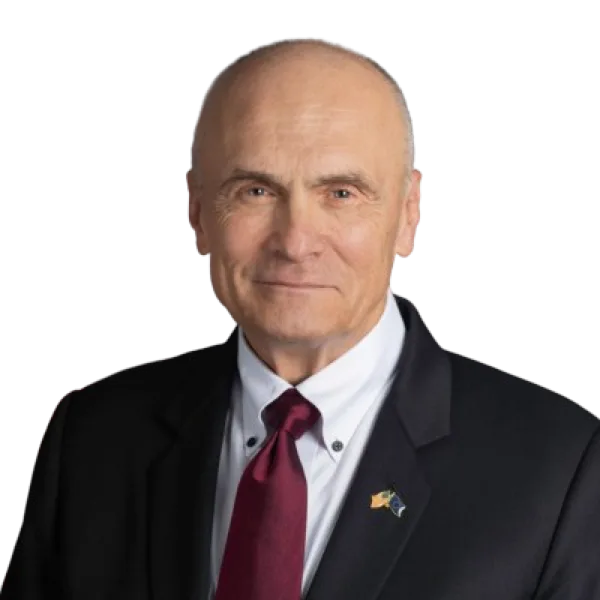
Andrew Puzder, Ambassador of the U.S to the EU Andrew Puzder
Ambassador of the US to the EU
Hans Roth, Senior Vice President and General Manager, EMEA, Red Hat Hans Roth is senior vice president and general manager for Europe, Middle East, and Africa (EMEA) at Red Hat where is he focused on developing and executing the company’s business strategy across EMEA including commercial, enterprise and channel sales, professional service, telecommunications, media and entertainment, consulting and training services, marketing, legal and people team functions.
Hans Roth
Senior Vice President and General Manager, EMEA, Red Hat
Aura Salla, Member, European Parliament Aura Salla is a Finnish MEP from the Kansallinen Kokoomus Party, which is part of the group of the European People’s Party (Christian Democrats). She was elected to the European Parliament in June 2024 where she is a member of the ECON committee and of the Delegation for relations with India. She is also a substitute for the IMCO committee, the Delegation for relations with Canada and the Delegation for relations with the countries of Southeast Asia and the Association of Southeast Asian Nations. Previously, she was a member of the Finnish Parliament, where she actively engaged in international and EU affairs. Before entering the Finnish Parliament, Aura held the role of managing public policy director and head of EU Affairs at Meta’s Brussels office. She also has extensive experience in the European Commission, where she worked as a Foreign Policy and Communications adviser in the European Political Strategy Centre and as a member of cabinet for vice-president Jyrki Katainen. Aura holds a doctorate’s in Political Science from the University of Turku, focusing on the politicization of the European Commission during the euro crisis, and a master’s degree in EU Economic and Foreign Policy from Leipzig University.
Aura Salla
Member,
European Parliament
Dariusz Standerski, Minister of Digital Affairs, Poland Doctor of economics, lawyer. Lecturer at the Faculty of Economic Sciences at the University of Warsaw. In 2015-2023 lead economist and member of the Management Board of the Kalecki Foundation. In 2019-2023, Director of Legislation at the Left Parliamentary Club. Author of more than 200 projects acts of law, including economic and social affairs. Co-author of the programme “Digital State. Strategy for Poland”, which includes the state of digital technologies in Poland, the European Union and the international arena, as well as specific tasks and objectives facing Poland in the digital area. Member of the Poznań branch of the Polish Economic Society. Member of the National Board of the New Left party.
Dariusz Standerski
Minister of Digital Affairs, Poland
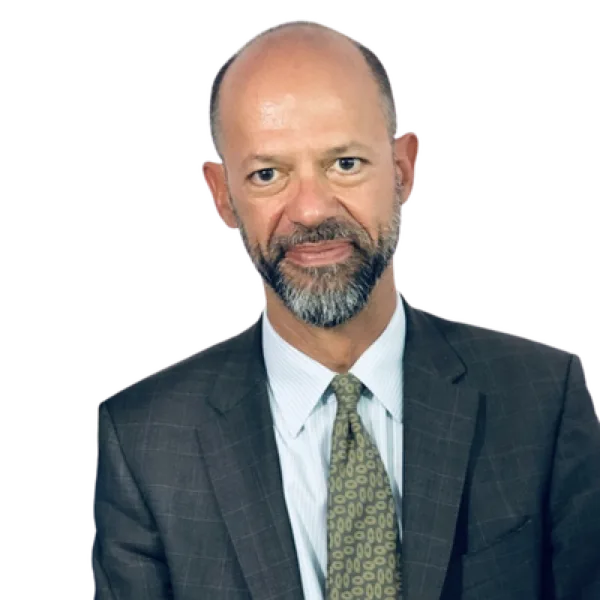
Ioannis Vrailas, Ambassador of Greece to the EU Born in 1962
• 1984: Traineeship at the European Commission (General Secretariat, in charge of monitoring the work of the European Parliament)
• 1985-86: Diplomatic Academy of the Ministry of Foreign Affairs
• 1986-88: Department of the European Communities of the Ministry of Foreign Affairs, responsible for E.C-Turkey and E.C- Cyprus relations
• 1988-89: for the needs of the Greek Presidency (2nd semester 1988), Permanent Representation of Greece in Brussels, as national representative of the Mediterranean working group
• 1989-91: Diplomatic Office of the Minister
• 1992-96: Permanent Representation of Greece to the United Nations, responsible, among other things, for monitoring the work of the Security Council (as well as for the coordination of the local Greek Presidency during the first semester of 1994)
• 1996-99: Embassy Advisor at the Greek Embassy in Tehran
• 1999-2003: European Correspondent at the A11 PESC Directorate at the time, responsible, among other things, for questions related to the participation of Greece in the Troika (2nd semester 2002) and of the Greek Presidency of the first semester 2003
• 2004-09: Permanent Representations of Greece to WEU and the EU, first as Deputy Representative to the Political and Security Committee, then as Coordinator for External Relations at the Permanent Representation of Greece to the EU
• 2009-11: Minister-Counselor at the Embassy of Greece in Washington
• 2011-16: appointed by the European External Action Service (EEAS) to the position of Deputy Permanent Representative of the European Union in New York
• 2016-17: seconded by the EEAS to the post of Diplomatic Advisor to the President of the UN General Assembly
• 2017-2019: Permanent Representative of the European Union to the Organization for Security and Cooperation in Europe
• 10.01.2020: Permanent Representative of Greece to the European Union
He holds a degree in Economics from the University of Athens and a Postgraduate Diploma in European Studies from the Free University of Brussels. Married, three children.
Ioannis Vrailas Ambassador of Greece to the EU
Note: All session timings below are in Central European Summer Time (CEST)
12:00 – 13:00
Networking lunch
13:00 – 13:15
Welcome remarks
Cecilia Bonefeld-Dahl, Director General, DIGITALEUROPE
13:15 – 13:40
Keynote conversation – Europe’s digital future: Presidency priorities
As Europe moves from defining its digital vision to implementing it, this keynote explores what it takes to shape digital sovereignty in a contested global environment. From artificial intelligence and trusted data to resilient infrastructure and strategic partnerships, the focus shifts to delivery: how to translate political ambition into tangible capabilities and global influence.
How can Europe remain open whilst reducing strategic dependencies? Where should policymakers prioritise to unlock scale and speed? And how can the next cycle of European leadership ensure that competitiveness, security and innovation reinforce each other?
This session sets the tone for the Summit: a Europe ready not only to define rules, but to shape outcomes and deliver on its digital sovereignty ambitions.
Henna Virkkunen, EVP European Commission for Technological Sovereignty, Security and Democracy
13:40 – 14:20
Europe’s data dilemma: protect privacy, share data or stay competitive?
The Digital Omnibus is a once-in-a-decade chance to simplify Europe’s data rulebook and cut compliance burdens. For European industry, however, simplification cannot be limited to a simple administrative clean-up; that would miss out on concrete benefits to legal certainty, investment incentives, and the protection of proprietary knowledge.
This panel will explore whether the proposed changes can provide companies with workable safeguards when they are legally obliged to share data, especially where that data may reveal trade secrets, intellectual property, product design choices, cybersecurity-sensitive information, or commercially strategic insights. With the GDPR also being revised as part of the Digital Omnibus, there is a clear opportunity to simplify and clarify the rules while preserving Europe’s strong protections for personal data. The extensive cross-over between different data and personal data regulations also entails a healthy debate.
The discussion will therefore focus on how Europe can unlock data-driven innovation while protecting personal data and giving industry the guarantees it needs to invest, compete, and scale in Europe.
Aura Salla, Member, European Parliament
14:20-14:40
Keynote
14:40-15:00
Networking coffee break
15:00-15:45
Advancing digital sovereignty through public procurement
This session explores how public procurement can become a strategic tool to strengthen Europe’s digital sovereignty, moving beyond compliance to actively shaping markets, creating demand and supporting trusted European solutions. What would it take for procurement to consistently reinforce sovereignty objectives across AI, cloud, cybersecurity and critical infrastructure?
The discussion will examine the frameworks needed to enable this shift. Which criteria, standards and governance models can guide procurement decisions in a fragmented market? The role of open source? And how can Europe align these rules with broader goals, building domestic capacity while remaining open, competitive and globally connected?
The challenge is clear: turning procurement into a driver of sovereignty, not just a process, and ensuring the rulebook is fit for that purpose.
15:45-16:00
Industry keynote
16:00-16:20
Fireside conversation – Bridging the Atlantic: Transatlantic tech cooperation
The transatlantic digital relationship remains one of the most powerful in the world, but it is under pressure. Industrial policy, security concerns and diverging regulatory approaches are reshaping how Europe and the United States engage.
This session explores how both sides can remain trusted partners whilst addressing strategic dependencies and maintaining a level playing field.
From cybersecurity and infrastructure to AI and supply chains, the challenge is to move from dialogue to delivery in a more competitive environment.
16:20-17:05
Scaling Sustainably: Data centres and chips at the EU crosssroads: energy, policy and AI ambition
As the EU pushes to triple data centre capacity to meet growing cloud and AI demand, the sector sits at the intersection of Europe’s digital sovereignty and climate commitments. This panel brings operators, policymakers, energy planners and AI stakeholders together to critically examine how rapid capacity expansion can align with decarbonisation, energy security and responsible AI, and how innovation across the full technology stack, from chips to systems to software, can support Europe’s competitiveness while reinforcing a diverse, resilient and open technology ecosystem.
The conversation will focus on practical barriers and opportunities for growth within the emerging EU policy framework – including the Cloud and AI Development Act (CAIDA), the proposed EU data centre rating scheme, and potential minimum performance standards (MPS) for facilities – while addressing public concerns about the rising energy footprint of next‑generation AI models.
17:05-17:15
Closing remarks
Henna Virkkunen, Executive Vice-President of the European Commission for Technological Sovereignty, Security and Democracy Henna Virkkunen
Executive Vice-President
European Commission for Technological Sovereignty, Security and Democracy
Justin Hotard, President and CEO, Nokia Justin Hotard
President and CEO, Nokia
Aura Salla, Member, European Parliament Aura Salla
Member, European Parliament
To view more information about the available sponsorship packages, please view the brochure.
The in person element of the event will take place at the Steigenberger Wiltcher’s. In person places are strictly limited and by application only for non-DIGITALEUROPE Members, so please only arrange travel to the event once you have confirmation from the event team following your application.
The event will be live streamed, and details of how to join the online platform will be sent in the week prior to the event to those registered for virtual participation.
If you are interested in knowing how you can get involved in the #DESummerSummit, or for any information, please contact
Kivanç Akil, Associate Director for Events & Executive Coordination
+32 473 36 17 54 / events@digitaleurope.org